How to Learn SEO: 10 Proven Strategies to Master SEO Faster
Introduction: How to Learn SEO
Learning SEO can seem difficult when you are just getting started. You may come across terms such as keywords, backlinks, crawling, indexing, meta descriptions, search intent, and technical SEO. At first, all these terms can feel confusing. The good news is that you do not need to become an expert overnight.
If you want to know how to learn SEO, the best approach is to learn one concept at a time and then practice what you have learned. SEO is not only about getting a website to appear on Google. It is about understanding what people search for, creating useful content, making your website easy for search engines to understand, and providing a good experience for visitors.
SEO is also a practical skill. Reading guides can give you the knowledge, but working on a real website helps you understand how SEO works in the real world.
In this guide, we will explore 10 proven strategies to master SEO faster, including keyword research, on-page SEO, technical SEO, content creation, backlinks, and common mistakes beginners should avoid.
Whether you are a blogger, student, freelancer, content creator, or small business owner, learning SEO can help you build a stronger online presence.

How to Learn SEO
Image 1 — Beginner-friendly SEO learning roadmap
What Is SEO and Why Is It Important?
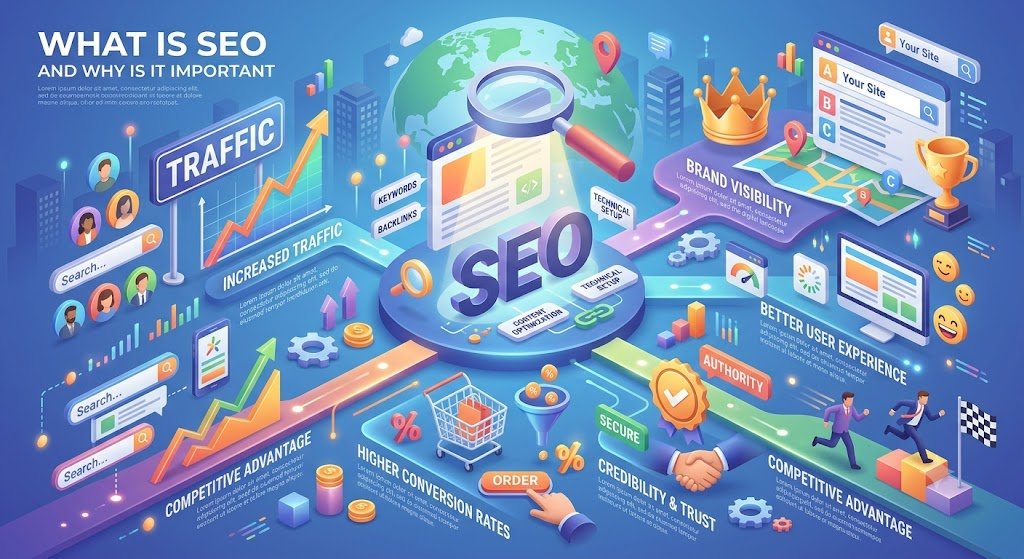
SEO stands for Search Engine Optimization. It is the process of improving a website and its content so that search engines can better understand it and users can find it through relevant searches.
For example, imagine you have written a blog post about beginner-friendly digital marketing tips. Someone searches for “digital marketing tips for beginners” on Google. If your article is useful, well-structured, relevant to the search, and technically accessible, it may have an opportunity to appear in search results.
- SEO is important because search engines can send people to your website without you having to pay for every visitor through advertising.
- Increase organic website traffic
- Reach people who are actively searching for your topic
- Build credibility and trust
- Improve your website visibility
- Generate leads or potential customers
- Grow a blog or online business over time
- However, SEO is not a magic trick. Ranking well can take time, and there is no guaranteed method for reaching the first position on Google.
- If you are learning how to learn SEO, start by understanding its purpose: create the best possible experience for people searching for information.
How to Learn SEO
Image 2 — What SEO is and why it matters
Learn How Search Engines Work
Before learning advanced SEO techniques, it is important to understand how search engines work.
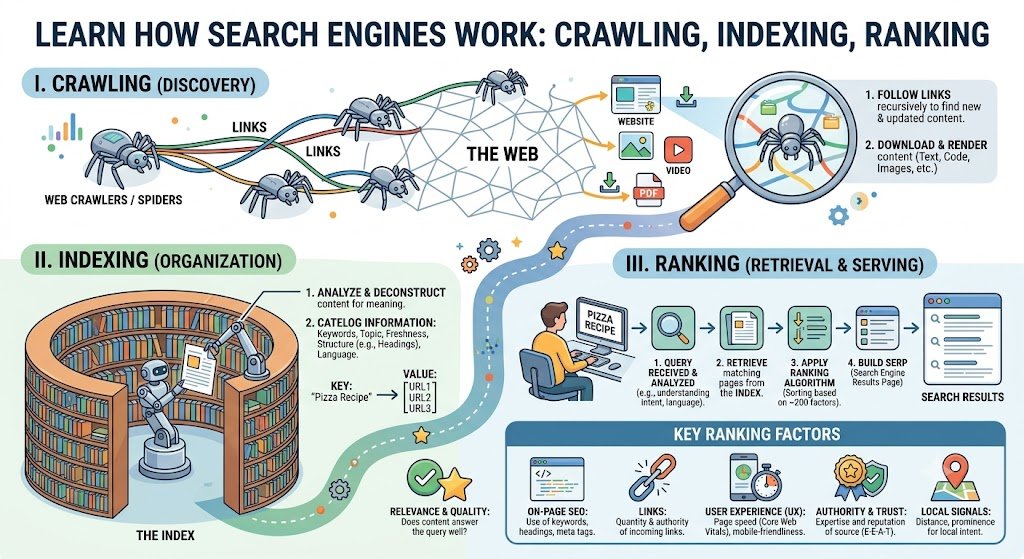
Search engines generally perform three major activities: crawling, indexing, and ranking.
Crawling
Search engine crawlers discover pages across the internet by following links and finding new or updated content.
Indexing
After discovering a page, a search engine analyzes and stores information about it in its index when the page is eligible to be indexed.
Ranking
When someone searches for something, the search engine determines which relevant results should be shown and in what order.
Search engines consider many signals when determining which pages are useful for a particular search. Relevance, content quality, website accessibility, user experience, and other factors can influence visibility.
Understanding this basic process makes SEO much easier to learn. Instead of simply trying random tricks, you can focus on helping search engines discover, understand, and serve your content to the right audience.
How to Learn SEO
Image 3 — Crawling, indexing, and ranking
Master On-Page SEO
On-page SEO focuses on elements you can control directly on your website or individual web pages.
It includes your content, headings, title, URLs, internal links, images, and other page elements.
One of the first things you should learn is how to create a clear and descriptive page title. Your title should tell readers and search engines what the page is about.
For example: How to Learn SEO: 10 Proven Strategies to Master SEO Faster
The title clearly communicates the topic and gives readers a reason to click.
You should also organize your article with logical headings. Headings make long content easier to scan and help readers quickly find the information they need.
Other important on-page SEO practices include:
- Use your main keyword naturally.
- Write useful and original content.
- Create descriptive URLs.
- Use relevant internal links.
- Optimize image file names and alternative text where appropriate.
- Write useful meta descriptions.
- Keep paragraphs easy to read.
- Match your content with search intent.
Do not repeat a keyword unnecessarily. This practice, often called keyword stuffing, can make content difficult to read and does not create a good experience for visitors.
When learning how to learn SEO, remember that on-page SEO is about making your content clear, useful, relevant, and easy to understand.
Learn Technical SEO Basics
Technical SEO may sound complicated, but beginners do not need to learn everything at once.
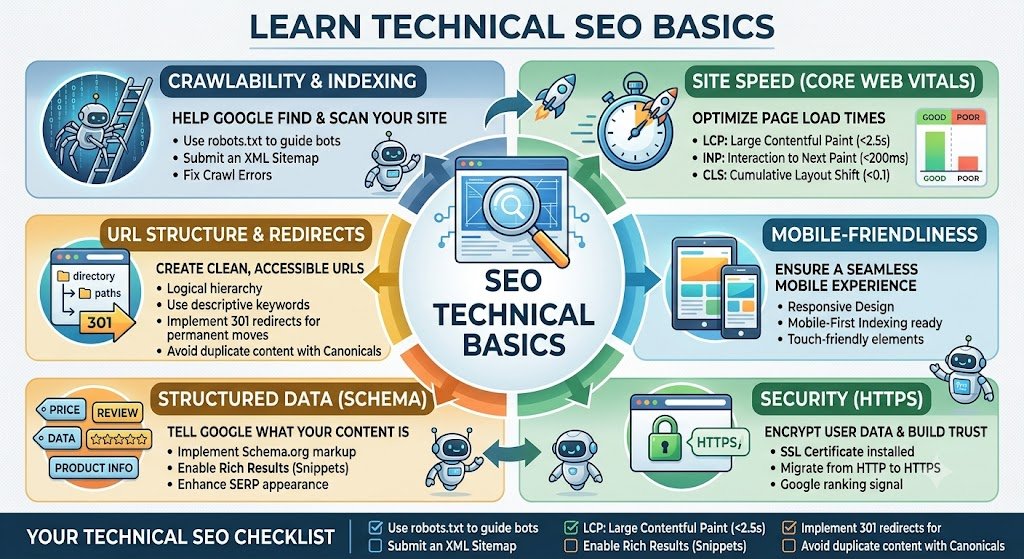
Technical SEO focuses on aspects of your website that help search engines access, crawl, understand, and index your content effectively.
Some important technical SEO areas include:
Website Speed
A slow website can create a frustrating experience for visitors. Try to keep your website efficient and avoid unnecessary elements that make pages slower.
Mobile Friendliness
Many people browse the internet using smartphones. Your website should work properly on different screen sizes.
HTTPS
HTTPS helps protect the connection between a website and its visitors. Make sure your website uses a secure connection.
XML Sitemap
An XML sitemap can help search engines discover important URLs on your website.
Robots.txt
The robots.txt file can provide instructions about which areas of a website crawlers may access. It should be configured carefully because incorrect settings can cause crawling problems.
Broken Links
Broken links can lead visitors to pages that no longer exist. Regularly checking important links can improve website usability.
You do not have to become a technical expert immediately. Start with the basics and gradually learn more as your website grows.
How to Learn SEO
Image 4 — Technical SEO basics and checklist
Understand Off-Page SEO
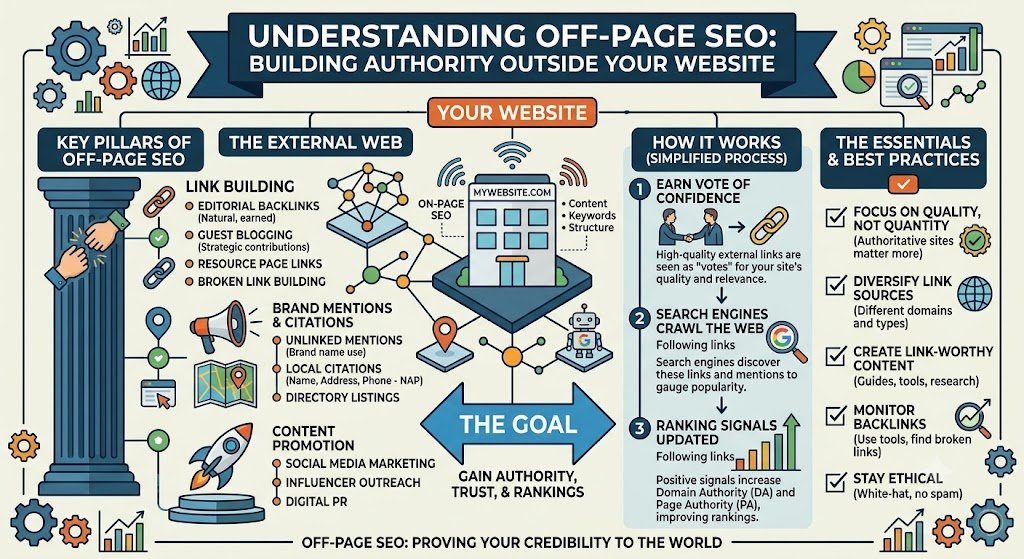
Off-page SEO refers to activities and signals that happen outside your own website and can influence your website’s reputation and visibility.
One of the most well-known areas of off-page SEO is link building.
When another reputable website links to your content, it can potentially help search engines discover your page and may contribute to your site’s authority, depending on the context and quality of the link.
However, not every backlink is valuable. Getting hundreds of low-quality or artificial links is not a good SEO strategy.
Off-page SEO can also involve:
- Building relationships within your industry
- Digital PR
- Earning mentions from relevant websites
- Creating content that people naturally want to reference
- Participating genuinely in relevant communities
The goal should not simply be to collect as many links as possible. Instead, focus on building a trustworthy website and creating resources that others find useful enough to mention.
How to Learn SEO
Image 5 — Understanding off-page SEO
Create High-Quality Content
Content is one of the most important parts of learning SEO.
You can understand keywords and technical settings, but if your content does not provide value to readers, it will be difficult to build a successful website.
Before writing an article, ask yourself: What does the reader actually want to know?
For example, someone searching for how to learn SEO may want a simple roadmap rather than a complicated technical explanation.
Good content should:
- Answer the reader’s question
- Provide useful and accurate information
- Be easy to understand
- Have a logical structure
- Use examples where helpful
- Avoid unnecessary repetition
- Be updated when information becomes outdated
Try to understand search intent before writing. Search intent is the reason behind a person’s search.
Someone searching “what is SEO” probably wants an explanation, while someone searching “best SEO tools” may be comparing tools.
When you understand the searcher’s goal, you can create content that better satisfies the query.

How to Learn SEO
Image 6 — Creating useful content with a clear strategy
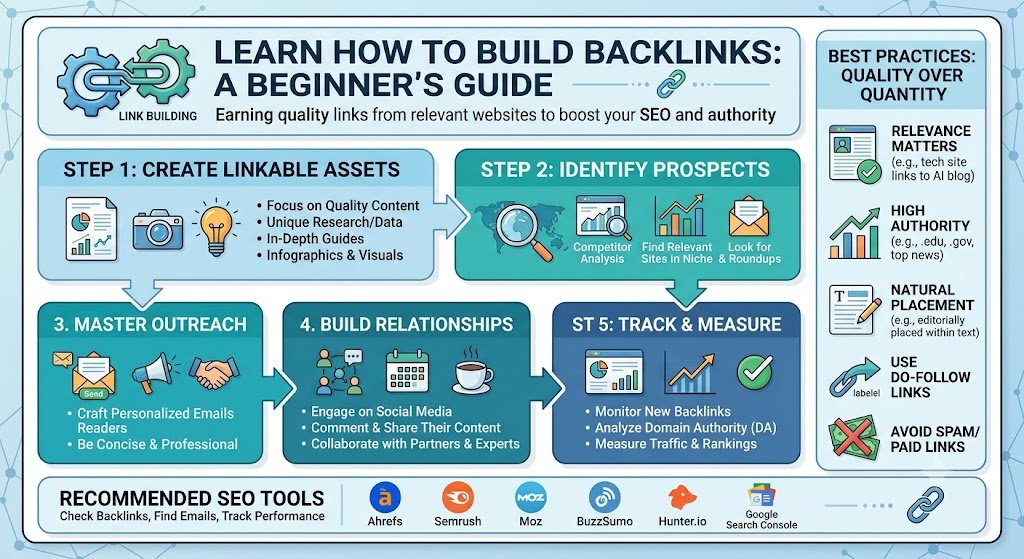
Learn How to Build Backlinks
Backlinks are links from another website to your website. They can be valuable when they are earned naturally from relevant and trustworthy websites.
Instead of trying to buy large numbers of links or use spammy methods, beginners should focus on creating content worth linking to.
How to Learn SEO:
For example, you could create:
- Original research
- Helpful tutorials
- Detailed guides
- Statistics and data summaries
- Useful checklists
- Free resources
- Original case studies
You can also promote your useful content to relevant websites, journalists, bloggers, and communities when appropriate.
Another important strategy is to build relationships. If people in your industry know and trust your work, they may be more likely to reference your content.
Remember that quality is generally more important than quantity when it comes to backlinks. One genuinely relevant and valuable link can be more useful than many low-quality links.
As you learn how to learn SEO, treat link building as a long-term relationship and content strategy rather than a numbers game.
How to Learn SEO
Image 7 — A beginner’s guide to building backlinks
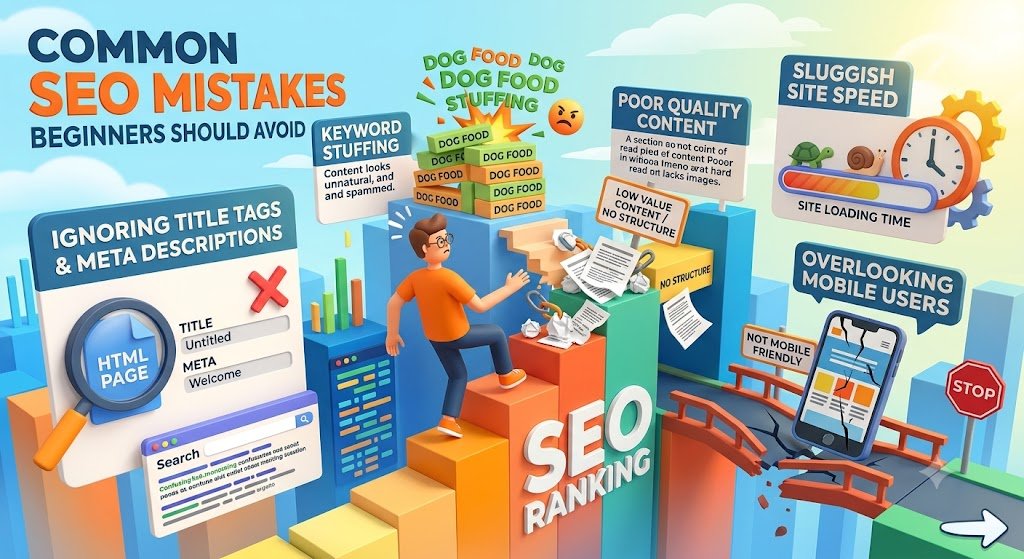
Common SEO Mistakes Beginners Should Avoid
When people first start learning SEO, they often make mistakes because they focus too much on shortcuts.
Here are some common mistakes to avoid.
1. Keyword Stuffing
Using the same keyword repeatedly can make your article unnatural and difficult to read. Instead, use your focus keyword naturally and cover related concepts that help readers.
2. Writing Only for Search Engines
Your website exists for people first. If your content sounds robotic or provides little value, ranking alone will not create a successful website.
3. Ignoring Search Intent
A page can target the right keyword but still fail to satisfy the searcher’s actual needs. Always consider what the person expects to find.
4. Buying Low-Quality Backlinks
Large numbers of artificial or spammy links can create SEO risks. Focus on earning relevant links naturally.
5. Expecting Immediate Results
SEO usually takes time. A new website may need consistent publishing, improvements, and patience before meaningful organic traffic develops.
6. Ignoring Technical Problems
Broken links, poor mobile usability, indexing problems, or other technical issues can make it harder for search engines and visitors to access your content.
7. Never Updating Old Content
Some topics change over time. Updating outdated information can help keep your content useful and accurate.
8. Copying Other Websites
Duplicate or unoriginal content does not give readers a strong reason to visit your website. Develop your own explanations, examples, opinions, and useful resources.
How to Learn SEO:
Avoiding these mistakes will make your SEO learning journey much smoother.
How to Learn SEO
Image 8 — Common SEO mistakes beginners should avoid
Track Your SEO Performance
Learning SEO is not only about publishing blog posts and waiting for visitors to arrive. You also need to track your SEO performance to understand whether your SEO efforts are actually working. Regular tracking helps you identify successful pages, discover problems, and make better decisions for your website.
One of the most important things to monitor when you track your SEO performance is organic traffic. Organic traffic refers to visitors who find your website through unpaid search engine results. If your organic traffic increases over time, it can be a positive sign that your content is gaining visibility.
You should also monitor your keyword rankings. Check which keywords are bringing visitors to your website and how your pages perform for relevant searches. Instead of focusing on only one keyword, look for overall improvements across multiple related keywords.
Another useful metric is click-through rate (CTR). CTR shows how often users click your page after seeing it in search results. If a page receives many impressions but very few clicks, consider improving the page title and meta description.
Impressions are another important part of how you track your SEO performance. They show how often your website or page appears in search results. Increasing impressions can indicate that your content is becoming visible for more searches.
Tools such as Google Search Console can make it easier to track your SEO performance. You can review clicks, impressions, CTR, search queries, and the pages receiving search traffic. Analytics tools can provide additional information about visitors and their behavior on your website.
Do not expect SEO results to change overnight. SEO is a long-term process, so review your data regularly and look for trends rather than reacting to small daily changes.
When you track your SEO performance, the goal is not simply to chase higher rankings. The real goal is to understand what your audience wants, improve your content, and make smarter SEO decisions. With consistent monitoring and regular improvements, you can gradually build stronger organic visibility and create a more successful website.
Frequently Asked Questions About Learning SEO
How long does it take to learn SEO?
You can learn the basic concepts of SEO within a few weeks if you study consistently. Becoming highly skilled takes longer because SEO requires practical experience, testing, analysis, and continuous learning.
Can beginners learn SEO?
Yes. SEO can be learned by beginners without an advanced technical background. Start with keyword research, search intent, on-page SEO, content creation, and basic technical SEO.
Is SEO difficult to learn?
SEO can feel difficult at first because it includes many different areas. However, learning one topic at a time and practicing on a real website makes it much easier.
Can I learn SEO for free?
Yes. There are many free articles, videos, documentation, tutorials, and SEO tools available online. You can begin learning without purchasing an expensive course.
Do I need coding skills to learn SEO?
You do not need advanced coding skills to learn the fundamentals of SEO. Basic knowledge of HTML can be useful, especially when you move into technical SEO.
How can I practice SEO?
The best way to practice is to work on a website or blog. Choose a topic, research relevant keywords, create useful content, optimize your pages, monitor performance, and improve your articles over time.
Is SEO still worth learning?
Yes. Search behavior continues to evolve, and businesses, creators, and website owners still need to understand how people discover information online. Learning SEO can be a useful digital marketing skill.
Conclusion: Start Your SEO Journey Today
Learning SEO does not happen in one day. The fastest way to improve is to combine learning with regular practice.
Start with the fundamentals. Understand how search engines work, learn keyword research and search intent, master on-page SEO, explore technical SEO, create useful content, and gradually learn about backlinks and off-page SEO.
Most importantly, do not become obsessed with ranking immediately. Focus on building a website that genuinely helps people.
If you are wondering how to learn SEO, remember this simple formula:
Learn → Practice → Measure → Improve → Repeat.
SEO is a long-term skill. The more you experiment, analyze your results, and improve your content, the more confident you will become.
You do not need to know everything before starting. Pick one topic today, apply what you learn, and continue improving your website step by step. With consistent practice and patience, you can build a strong foundation in SEO and gradually move toward more advanced strategies.